
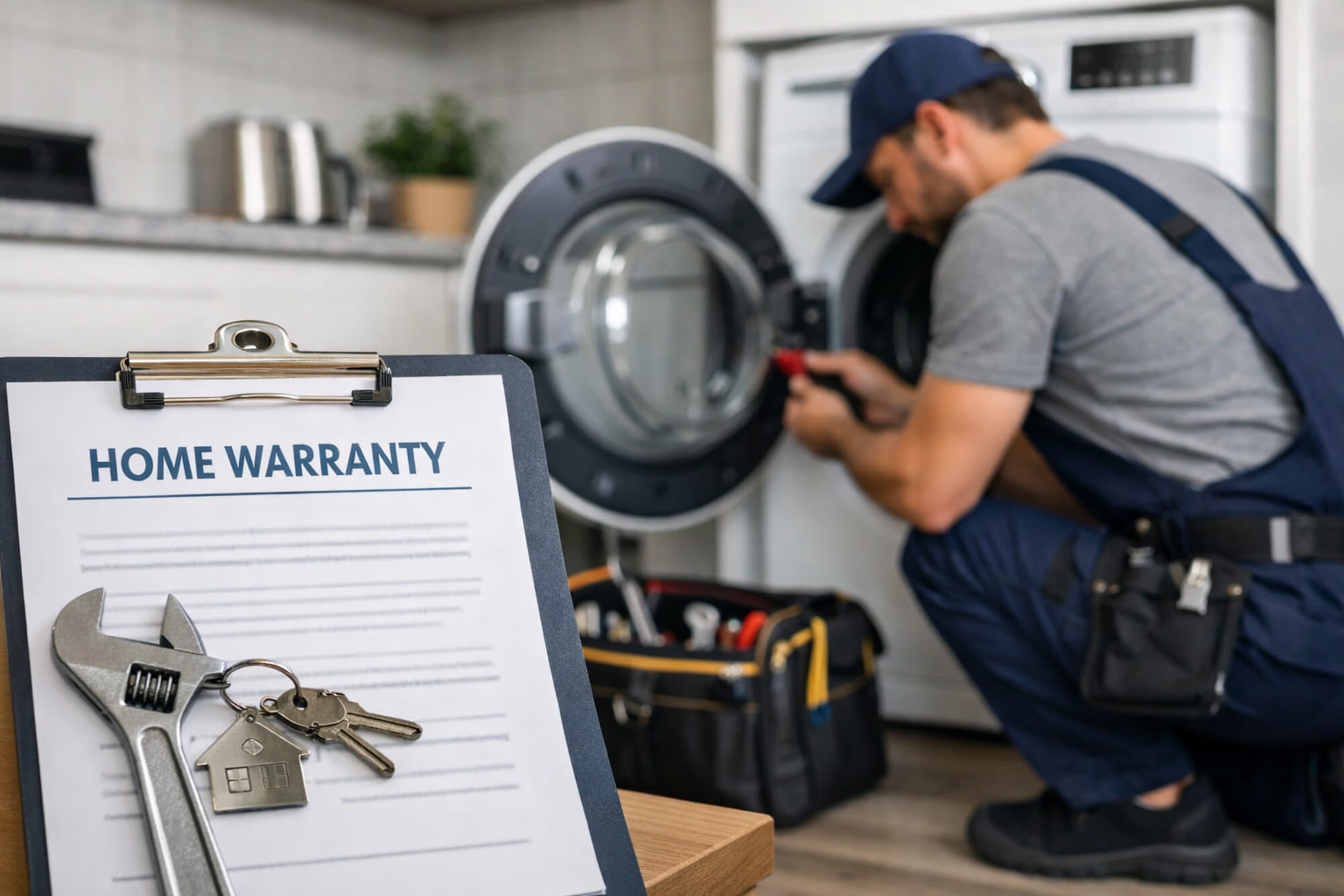
Should You Use a Home Warranty on a Rental Property? What Beaverton Property Managers Want Owners to Know
For many homeowners, a home warranty feels like a sensible safety net. For a relatively small annual fee, the warranty company promises coverage for major systems and appliances in the home. When something breaks, the warranty company coordinates the repair and absorbs some of the cost.
On paper, it sounds like a simple solution.
Once a property becomes a rental, however, the equation changes. Rental housing operates under different expectations, legal timelines, and operational realities than owner occupied homes. What works reasonably well for a homeowner managing their own house often creates complications when tenants, habitability laws, and professional property management systems are involved.
This is one of the reasons many experienced companies providing Beaverton Property Management services tend not to rely on home warranties as part of their maintenance process.
Home warranties are not necessarily bad products. They simply were not designed with rental housing operations in mind.
Understanding why requires looking at how repairs actually work in rental property management.
Why Home Warranties Work for Homeowners
It is easy to understand why homeowners are drawn to home warranties.
The primary appeal is predictability. Instead of worrying about a large repair bill, the homeowner pays an annual premium and a service fee when something breaks. The warranty company coordinates the repair, dispatches a contractor, and pays some portion of the cost depending on the coverage.
For someone living in the home, this arrangement can be convenient.
The homeowner does not need to locate contractors or evaluate repair options. The warranty company sends someone from its network. The homeowner waits for the appointment, the contractor diagnoses the issue, and the warranty company authorizes the repair.
If a repair takes several days or even a couple of weeks, it may be inconvenient, but most homeowners can tolerate that delay.
This flexibility with timing is one of the key reasons home warranties function better in owner occupied homes.
Rental housing rarely has that luxury.
Why Home Warranties Often Struggle in Rental Properties
Once tenants are involved, the repair process becomes significantly more complex.
When a repair is handled through a home warranty, the timeline typically involves several additional steps beyond a normal maintenance request.
A resident reports a problem to the property manager.
The property manager informs the owner.
The owner submits a claim to the warranty company.
The warranty company assigns a contractor.
At this point the process often becomes more complicated.
The contractor frequently contacts the owner directly because the warranty claim was submitted in the owner’s name. The owner then has to explain that the property is managed by a property management company and occupied by a tenant. The contractor must then coordinate with the property manager, who must coordinate with the resident to schedule access.
Even before the repair process begins, this communication loop can create delays.
Once the contractor visits the property, the first appointment is typically diagnostic. If parts are required, those parts must be ordered through the warranty company. After the parts arrive, a second appointment is scheduled to complete the repair.
Even when everything goes smoothly, the entire process can easily stretch to ten to twenty days.
There is also another issue that property managers frequently encounter with warranty repairs.
Because warranty companies function similarly to insurance programs, they often control costs by approving inexpensive aftermarket components instead of original parts. Property managers regularly see situations where these parts fail prematurely, leading to repeat service calls, additional delays, and frustrated residents.
From the tenant’s perspective, the property manager is responsible for the repair. Delays caused by warranty procedures are rarely understood or accepted by residents.
When repairs drag on for weeks, the frustration is almost always directed at the management company.
Legal Repair Timelines in Oregon
Another critical factor is Oregon’s habitability requirements.
Oregon landlord tenant law requires rental properties to remain in habitable condition. Certain repairs must be addressed quickly in order to meet these legal obligations. Issues involving essential services such as heating, plumbing, hot water, and electrical safety must be taken seriously and addressed promptly.
While the exact response requirement depends on the specific situation, serious habitability issues are generally expected to be addressed quickly once they are reported. In many situations, landlords are expected to begin taking action within roughly forty eight hours of being notified.
Because of these timelines, professional property managers cannot afford to wait days or weeks for warranty vendors to move through their scheduling process.
At Profound Properties, when a potential habitability issue is reported or observed in the field, it is escalated immediately. The issue is flagged internally so the team can begin coordinating a solution right away. This process exists specifically because repair timelines in Oregon can be extremely tight.
Waiting for a warranty contractor to move through its scheduling process could place the property at risk of falling out of compliance with Oregon housing requirements.
The Vendor Control Problem
Another challenge with home warranties involves contractor quality and coordination.
Professional property management companies rely on carefully vetted vendor networks. These vendors have established relationships with the management company and understand the expectations involved in working with rental housing.
They communicate well with residents, respond quickly when issues arise, and provide consistent repair quality.
Warranty companies operate differently.
They dispatch contractors from their own network, which may include vendors the property manager has never worked with before. These contractors may be located outside the immediate area or may have limited scheduling availability.
In addition, property managers often have no visibility into whether the contractor’s insurance documentation has been verified. Professional property management companies typically maintain copies of vendor liability insurance before allowing work to be performed at a managed property.
When a warranty company sends a contractor, the property manager may not have confirmation that the vendor carries appropriate coverage. If damage or injury occurs at the property, that lack of documentation can create significant complications.
Warranty networks also tend to rely heavily on contractors willing to accept lower compensation rates from the warranty company. In many markets, these are vendors who may struggle to obtain work through traditional channels due to reliability or communication issues.
This lack of vendor control makes it difficult for property managers to guarantee the quality and timing of repairs.
A Better Way to Use a Home Warranty
For owners who already have a home warranty, there is still a practical way to approach the situation.
At Profound Properties, repairs are handled through our normal maintenance process using vetted vendors. This allows repairs to be completed quickly, professionally, and in compliance with Oregon habitability standards.
If an owner chooses to keep their home warranty policy, they are welcome to do so.
Once the repair is completed, the owner can submit the invoice to the warranty company to determine whether reimbursement may be available under the policy.
This approach allows the repair to happen quickly while still preserving the possibility of recovering some of the cost through the warranty provider.
Most importantly, it prevents residents from experiencing long delays caused by warranty claim procedures.
What Smart Rental Property Owners Focus On Instead
Experienced rental property owners typically focus less on warranty programs and more on building reliable maintenance systems.
A successful maintenance strategy starts with a dependable network of vendors who can respond quickly when repairs are needed. Preventative maintenance also plays an important role in protecting the condition of the property.
Routine HVAC servicing, inspections of plumbing systems, and proactive maintenance often prevent larger problems before they occur.
Clear communication with residents ensures issues are reported early and addressed before they escalate.
Some owners also choose to set aside funds that might otherwise be spent on warranty premiums. Maintaining a repair reserve allows repairs to be handled immediately without relying on warranty approval processes.
Over time, well organized maintenance systems tend to save owners more money than warranty programs while protecting the property and maintaining strong resident relationships.
Conclusion
Home warranties are not inherently bad products. For homeowners living in their own homes, they can provide convenience and some level of cost predictability.
Rental housing operates under a different set of requirements.
Repair timelines, habitability laws, tenant expectations, and vendor coordination all require a maintenance system that can respond quickly and reliably.
For that reason, many companies providing Beaverton Property Management services choose not to rely on home warranty programs when managing repairs.
Instead, professional property management focuses on responsive maintenance systems, trusted vendors, and repair processes that protect both the property and the resident experience.
Owners who wish to keep a warranty can still submit repair invoices afterward to see whether reimbursement may be available under their coverage.
If you would like to learn more about how professional property management handles rental property repairs in Oregon, the team at Profound Properties is always happy to help.