When Should You Paint a Rental Property? A Practical Guide for Beaverton Property Owners
Paint does not last forever.
And in rental properties, it tends to wear out faster than most owners expect.
Between normal day-to-day use, multiple move-ins and move-outs, and varying levels of care from residents, even a well-maintained rental will show wear over time. Scuffs, dings, patchwork repairs, and general aging all add up.
The question is not whether you will need to paint. The question is when it actually makes sense to do it.
At Profound Properties, we look at paint as a leasing decision, not just a maintenance expense. Done at the right time, it helps your property rent faster and for more. Done at the wrong time, it either wastes money or quietly hurts your results.
Paint Is About Leasing Performance, Not Perfection
When preparing a property for rent, the goal is simple:
Get it clean, get it presentable, and get it rented quickly with a strong applicant.
Paint plays a bigger role in that than most owners realize.
When a prospective resident walks into a vacant home, there are only a handful of things they notice in each room:
Flooring
Fixtures
And the paint on the walls, ceilings, trim, and doors
If the walls look dirty, stained, or inconsistent, the home feels dirty. It does not matter how clean it actually is.
Fresh paint is the interior equivalent of curb appeal. A clean, neutral, well-painted home feels like a property that has been cared for. A worn or patchy paint job feels like the opposite.
That directly impacts how quickly the property rents and the quality of applicants you attract.
Paint Also Helps Eliminate Odors
This one often gets overlooked.
Over time, walls can absorb smells from cooking, pets, smoke, and general occupancy. Even after a professional cleaning, those odors can linger.
A fresh coat of paint helps seal those smells and gives the home a clean, neutral baseline. When someone walks in and the home smells fresh, that matters more than most people think.
Fun fact: An old sales trick some agents used was to bake cookies in the oven before an open house - or open a can of paint and hide it somewhere.
When Should You Actually Paint?
You do not paint on a schedule. You paint when it affects performance.
Here are the main triggers:
The paint condition makes the home feel dirty or worn
The current paint is limiting your ability to attract applicants
The property is likely to sit longer because of how it shows
If none of those are happening, painting may not be necessary yet.
A Simple Rule of Thumb for Scope
This is where owners tend to overthink things.
A practical rule:
If more than half the walls in a room need paint, paint the entire room
If more than half the rooms in the home need paint, paint the entire home
Trying to pick and choose individual walls often does not save money and usually creates a worse result.
From a vendor standpoint, partial scopes can actually be harder to execute. Setup, masking, and labor are still required, and piecemeal work often carries a premium. In many cases, the cost difference between partial and full painting is smaller than owners expect.
The “Polka Dot Effect” and Why Touch-Up Paint Often Fails
Touch-up paint sounds like the easy, cost-effective solution.
Sometimes it is, and sometimes it isn’t.
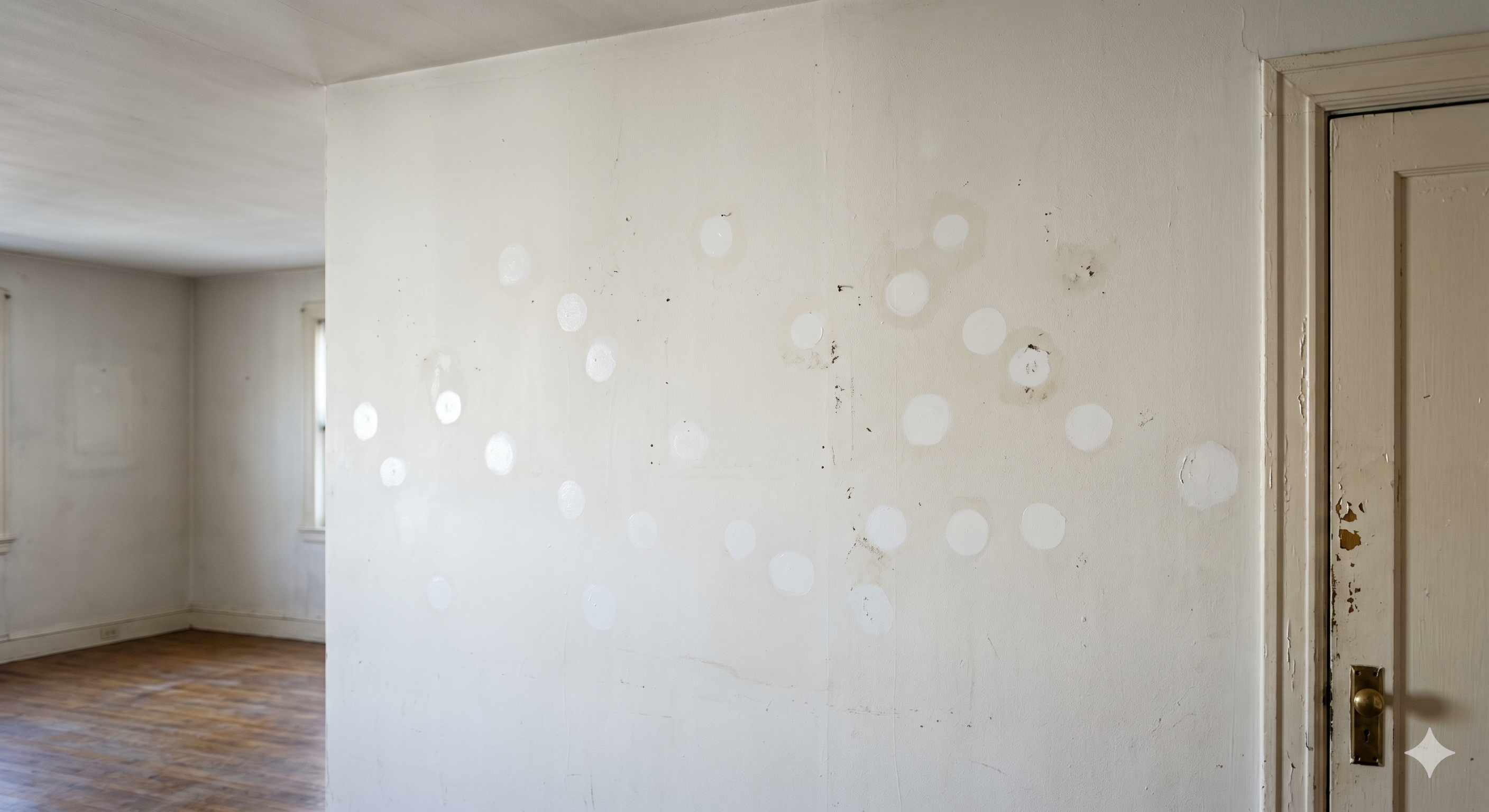
When touch-ups are done on aged or worn walls, you end up with what we call the “polka dot effect.” You see fresh, clean spots scattered across a wall that is slightly faded or dirty. Once you step back, those spots stand out even more than the original wear.
And when a prospective resident walks into an empty room, that is exactly what they focus on.
Touch-up paint works best under very specific conditions:
The paint is relatively new (generally within a few years)
You have the exact original color and product
The walls have not faded or absorbed grime
As paint ages, matching becomes less reliable. Sunlight affects sheen, and everyday use changes how the wall reflects light. At that point, touch-ups often make things worse, not better.
As a general guideline:
Newer paint (typically three years or less) can often be touched up successfully
Mid-life paint becomes harder to blend
Older paint (often around five years or more) usually requires painting corner to corner
If you are painting corner to corner in multiple rooms, you are often already in full repaint territory.
Color Choices Can Quietly Hurt Your Rental
Condition is not the only factor. Color matters.
Bold or personalized colors may work in a home you live in, but they can limit a rental property.
If a prospective resident walks into a home and sees:
A pink bedroom
A bright blue office
A dark or bold accent wall
They are now thinking about repainting before they even apply.
You only need one room to turn someone away.
For example, someone may love the home overall, but they do not want to deal with repainting a bedroom they plan to use as an office. That hesitation can be enough to lose the application.
Neutral, light, consistent colors give the broadest appeal.They allow residents to bring their own style through furniture and décor, not your wall colors.
Paint Quality Matters More Than Most Owners Think
Not all paint is the same.
There is always a balance between material cost and labor. Labor is the larger expense, so using the cheapest paint to save a small amount upfront often leads to repainting sooner.
On the other hand, using the highest-end residential paint designed to last 15 years does not make sense in a rental either.
A practical approach:
Walls: mid-grade, durable paint that can be cleaned and touched up
Trim, doors, and cabinets: higher-grade, more durable finishes due to heavier wear
Ceilings: lower-grade is typically fine, but still appropriate for the environment
The goal is not the cheapest option or the most expensive option - the goal is something that holds up well, looks clean, and performs over time.
Cost vs. Vacancy: Where Owners Get This Wrong
It is easy to focus on the cost of paint.
The better question is what it costs you not to paint.
If worn or outdated paint causes your property to sit longer, that lost rent adds up quickly. In many cases, one to two weeks of additional vacancy can cover a significant portion of a paint job, and in some cases the full cost depending on scope.
Delaying paint to “save money” can end up costing more than doing it correctly the first time.
A Simple Way to Make the Decision
Before approving a paint job, ask:
Does the current paint make the home feel clean and well-maintained?
Will new paint help us rent faster or attract better applicants?
Are we already close to needing a full repaint anyway?
If the answer is yes to any of those, painting is usually the right call.
Final Thought
Paint is not just a cosmetic item in a rental property. It is a tool.
Used correctly, it helps you reduce vacancy, attract stronger applicants, and maintain the overall condition of your investment.
Used incorrectly, it either wastes money or quietly drags down your results.
If you are unsure, that is usually the point where a quick evaluation can make a meaningful difference.